

Voyage LA: Kathleen Bigsby, PhD of KB Network
Today, we’d like to introduce you to Kathleen Bigsby, PhD
Hi Kathleen, so excited to have you on the platform. So before we get into questions about your work-life, maybe you can bring our readers up to speed on your story and how you got to where you are today?
My early professional journey brought clarity and purpose to both my personal and career paths. Growing up in Upstate New York, I absorbed invaluable lessons from my family and community that instilled a lifelong commitment to service and compassion. While completing my dissertation, I joined a nonprofit organization supporting individuals living with substance use disorders and co-occurring conditions. What began as an opportunity to serve soon became a profound education in resilience, humanity, and hope.
The women in our care, many of them mothers, revealed to me the true meaning of survival, empathy, and courage. Together, we worked to transform cycles of generational trauma and addiction into pathways of healing, growth, and renewed possibility. That experience became the cornerstone of my professional mission: to lead with purpose, serve as a catalyst for change, and enhance systems that promote holistic well-being.
I have since carried out that mission in California, where I have designed and led integrated systems of care that support individuals with complex behavioral health needs. Across various roles, including executive, clinician, and professor, I have witnessed the universal human struggle to break free from maladaptive coping patterns that inhibit authenticity, growth, and fulfillment. My work focuses on empowering individuals to cultivate self-awareness, resilience, and a sense of purpose that transcends their circumstances.
At a time when many feel overwhelmed by fear or loss of hope, I remain devoted to the belief that with compassion, support, and courage, every individual can rediscover their capacity for joy, healing, and the limitless possibilities of transformation.

Leader-ing: Leadership in Action
During a recent mentoring session, my mentee and I explored what it truly means to take action as a leader. Rather than viewing leadership as a static role, we discussed it in terms of 'leader-ing'—a verb that captures leadership as a dynamic, adaptive process. Embracing this perspective means recognizing that effective leadership involves providing continuous support, engaging in creative problem-solving, and actively fostering team growth to build a collaborative and positive environment.
The concept of leader-ing describes a dynamic, action-oriented approach to leadership that prioritizes adaptability, creativity, and team development within fast-changing organizational environments. This paradigm shifts leadership from a static position or solely a noun, toward a continuous verb—emphasizing fluid support, active creation, and ongoing personal and professional growth for both leaders and their teams.

Meaning-Making Reinterpretation
"The privilege of a lifetime is to become who you truly are." - Carl G. Jung.
When we contemplate making a change, our reluctance or ambivalence about it can be the result of beliefs about ourselves and the meaning we ascribe to past actions, as well as our sense of agency in relation to change. Transformation is not about eliminating struggle, but about reinterpreting meaning, facing inner conflicts, and integrating unconscious material into conscious awareness. It encourages us not just to accept difficult feelings but to reinterpret them as vital steps in the lifelong art of "becoming."
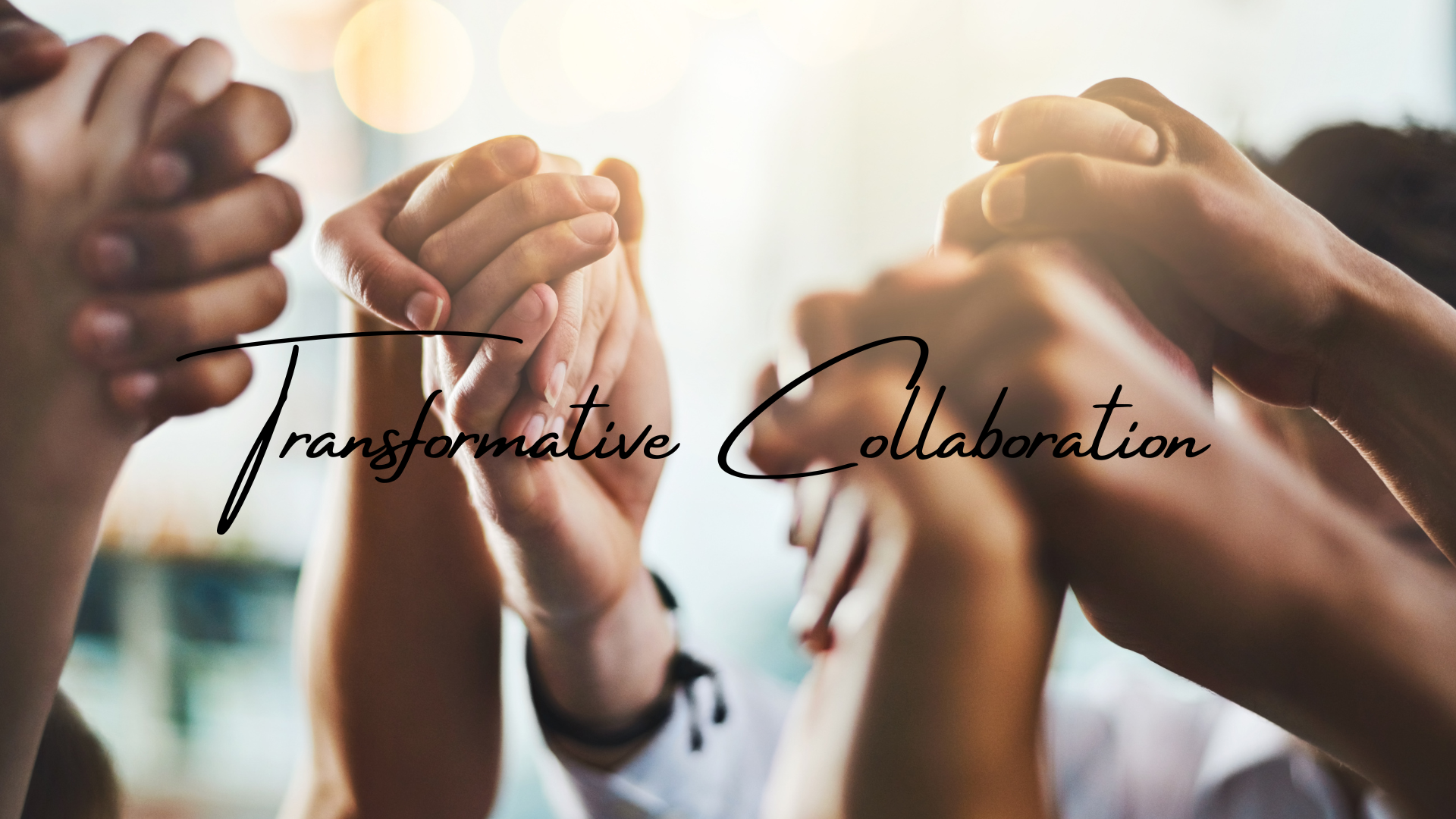
Leadership: Cultivating Transformative Collaboration for a Resilient Future
Leadership is akin to being a skilled gardener who nurtures growth. Yet, it also involves adapting to unpredictable climates and remaining agile, adjusting strategies to foster team resilience and innovation. To become masterful, one must anticipate unforeseen challenges and cultivate an environment rich with the necessary elements for growth, such as trust, open communication, and continuous learning. A robust harvest results from patience, nurturing, and actively removing the weeds (distractions) that can impede progress.
Throughout my executive administrative career, my systems-theoretical orientation, combined with my background as a clinician and professor, has provided me with a broader perspective, enabling me to cultivate a community of professionals preparing for the future in leadership. This mindset, shaped by my journey, has reinforced my awareness that traditional, hierarchical leadership styles often hinder growth and stifle innovation.

A Systems & Strength-Based Approach with Maladaptive Behavioral Patterns
A systems-based approach to assessing and intervening in maladaptive behavioral patterns in behavioral health provides the opportunity to support the full range of patterns on the continuum, from functional to maladaptive, and potentially to a diagnosed level of compromised quality of life. Integrating neurobiological, psychosocial, and systemic perspectives, while prioritizing collaborative, strength-based engagement and motivational enhancement to foster sustainable transformation and optimal quality of life.
Organizational Culture: A Key Leadership Focus to Not Only Survive but Thrive
It is often said that the test of leadership is how an organization faces a crisis. But the real test happens long before an emergency occurs when the leadership creates a culture of cooperation and mutual respect and fosters resilience and innovation among the team. These attributes must be cultivated in times when the organization is stable so they can be seamlessly put into action when any number of critical incidents occur.
As we approach the one-year anniversary of wildfires that impacted thousands of lives in Southern California, I have found myself reflecting on this transformative moment, and what prepared our team to execute a seamless evacuation of our patients and transition into managing their needs as we mobilized alternative support services. The team’s ability to work collaboratively and have trust in one another supported the best possible outcome.
It is the health of an organizational culture that is a fundamental stabilizing force at critical junctures and transitions. The entirety of the team needs a general expression of trust and safety that is exemplified not only by the leaders but also one another. When team members have confidence that their contribution matters, loyalty and commitment become well-earned byproducts of their experience. A healthy organization has members who hold themselves and others accountable for outcome excellence. It is no longer the common belief to tough it out with an organization that is not true to its values and mission. As individuals, we want to end our workday feeling fulfilled and having contributed to something of value. Organizations with a healthy culture are more effective when implementing initiatives that will drive the success of the business. These qualities will become more critical in the evolving healthcare industry and will become the critical differentiator between organizations that thrive versus those that do not survive.

Transformative Moments: Resilience and Legacy
As we approach the one-year anniversary of wildfires that impacted thousands of lives, I have found myself reflecting on this transformative moment. I believe it was nearly two months after the life-changing wildfire swept through Southern California when I truly felt the enormity of the experience. For 13 days and nights, I saw images in photos and video of the Woolsey Fire. Like so many thousands of others, I sat in disbelief as I reconciled the devastation of which I had been a part. Even as my team and I were abandoning our homes and our treatment center to transport patients out of the fire zone, we could not fathom the scope of the disaster. The impact was staggering: